Minoxidil vs. Finasteride: Comparing Hair Loss Treatments
If you’re reading this, the chances are you’re on a hair loss, fact finding mission. Here we’ll break down the differences between the two most commonly used hair loss treatments, Minoxidil and Finasteride, to help you decide which might be the best one for you.
Before we delve into the solutions, let’s quickly explain what hair loss is and how to recognise if it’s something that needs treating versus a normal amount of shedding.
How Do I Know If I Need Hair Loss Treatment?
Hair shedding is normal, most of us lose around 50–100 hairs a day. However, this may gradually increase, and you may notice your parting seem wider, your ponytail feel thinner, or see thinning at the temples or crown. [1] These may be signs that you’re experiencing hair loss, and we recommend speaking to your dermatologist or starting a consultation with our clinical experts.
What Causes Hair Loss In Women?
This is important to understand as it will determine which treatment is right for you, if any. The most common cause of hair loss in women is androgenetic alopecia, or female pattern hair loss. Other causes of hair loss include telogen effluvium (stress and trauma-induced hair loss), autoimmune conditions such as alopecia areata, traction alopecia, medications, or systemic illness. [2]
Minoxidil Explained
Minoxidil is one of the few hair loss treatments available to women. It is a type of medication known as a vasodilator. This means it increases blood flow and nutrient delivery to the hair follicles, and keeps the hair in its growth (anagen) phase for longer. [4] This combination of factors help stimulate hair growth and prevent shedding. Here at Dermatica, we treat hair loss with topical Minoxidil, which means it is applied directly to the scalp. It is also possible to take Minoxidil orally. [5]
What Causes Hair Loss In Men?
In men, the most common cause is androgenetic alopecia, or male pattern hair loss. It is usually hereditary and caused by the hormone DHT (dihydrotestosterone). DHT can cause hair to become shorter, finer and eventually stop growing. This hormone can also cause the prostate to become enlarged, also known as benign prostatic hyperplasia (BPH). [6] Other causes of hair loss include acute telogen effluvium, medications e.g. chemotherapy and trichotillosis (hair pulling). [2]
Finasteride Explained
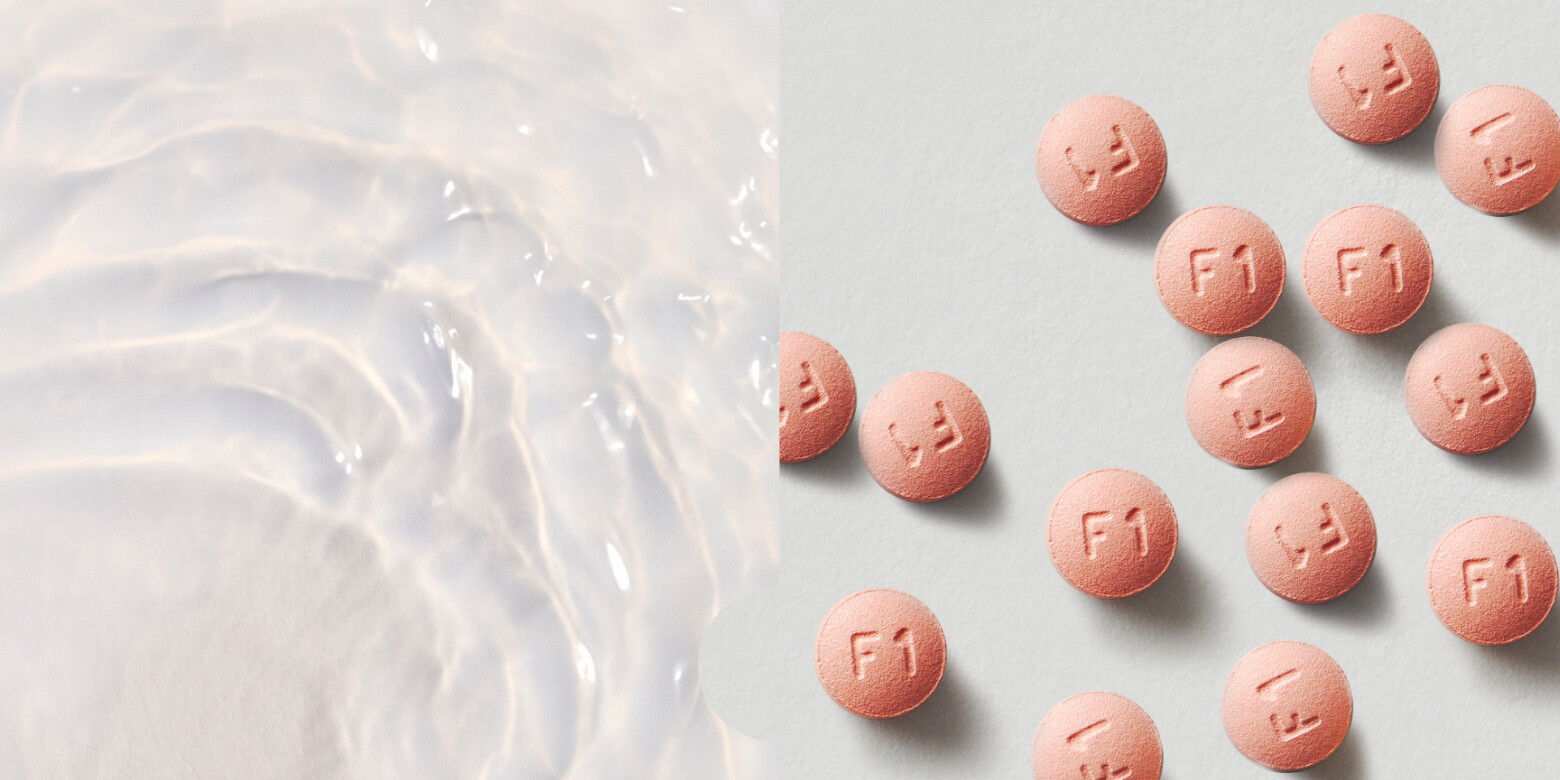
Finasteride is a medication used to treat male hair loss and an enlarged prostate. Taken daily, it works by blocking the enzyme in the body (called 5α-reductase) that converts testosterone into DHT. [6]
When Can You Expect To See Results?
Minoxidil works best when used in the early stages of hair loss. After a period of increased shedding at the beginning of treatment (this only lasts a few weeks), most people will begin noticing new, thicker hair growth from 4 months. [4] As this treatment keeps the hair in its growth phase, your hair should feel thicker and fuller while taking Minoxidil.
Taken daily, people taking finasteride should start to see results after 3-6 months. [6] Finasteride also needs to be taken continually to maintain results.
Which Hair Loss Treatment Is Right For You?
Minoxidil and Finasteride work in different ways, and are used by different groups of people. Finasteride is usually only prescribed for men as it can cause birth defects if exposed to (orally or through the skin) during pregnancy. In certain circumstances, it may be prescribed off-label for women, but this requires careful assessment and strict medical supervision. [7] Often, dermatologists will prescribe a combination of Minoxidil and Finasteride to men for maximum effectiveness.
Whatever the reason for your hair thinning, our clinical experts are here to help. Find out if topical hair loss treatment is right for you by visiting our website.
References:
1. NHS website. Hair loss [Internet]. nhs.uk. 2017. Available from: https://www.nhs.uk/symptoms/hair-loss/
2. Society PCD. Alopecia – an overview [Internet]. Primary Care Dermatology Society. Available from: https://www.pcds.org.uk/clinical-guidance/alopecia-an-overview
3. NICE [Internet]. Female pattern hair loss (female androgenetic alopecia). Available from: https://cks.nice.org.uk/topics/female-pattern-hair-loss-female-androgenetic-alopecia/
4. Badri T, Nessel TA, Kumar D D. Minoxidil [Internet]. PubMed. Treasure Island (FL): StatPearls Publishing; 2020. Available from: https://www.ncbi.nlm.nih.gov/books/NBK482378/
5. Minoxidil: Uses, Dosage, Side Effects, Warnings [Internet]. Drugs.com. 2024. Available from: https://www.drugs.com/minoxidil.html
6. Finasteride: Uses, Dosage, Side Effects, Warnings [Internet]. Drugs.com. Available from: https://www.drugs.com/finasteride.html
7. Care P. Hyperandrogenism [Internet]. Primary Care Dermatology Society. 2025. Available from: https://www.pcds.org.uk/clinical-guidance/hyperandrogenism#management

Caroline Ferry
Caroline Ferry is a freelance journalist and copywriter, who has written for Grazia Magazine, Harper's Bazaar, Tatler and Elle and consults for many skincare, fragrance and fashion brands.

Related Posts