
Noticed New Brown Spots? Our Experts Explain Why
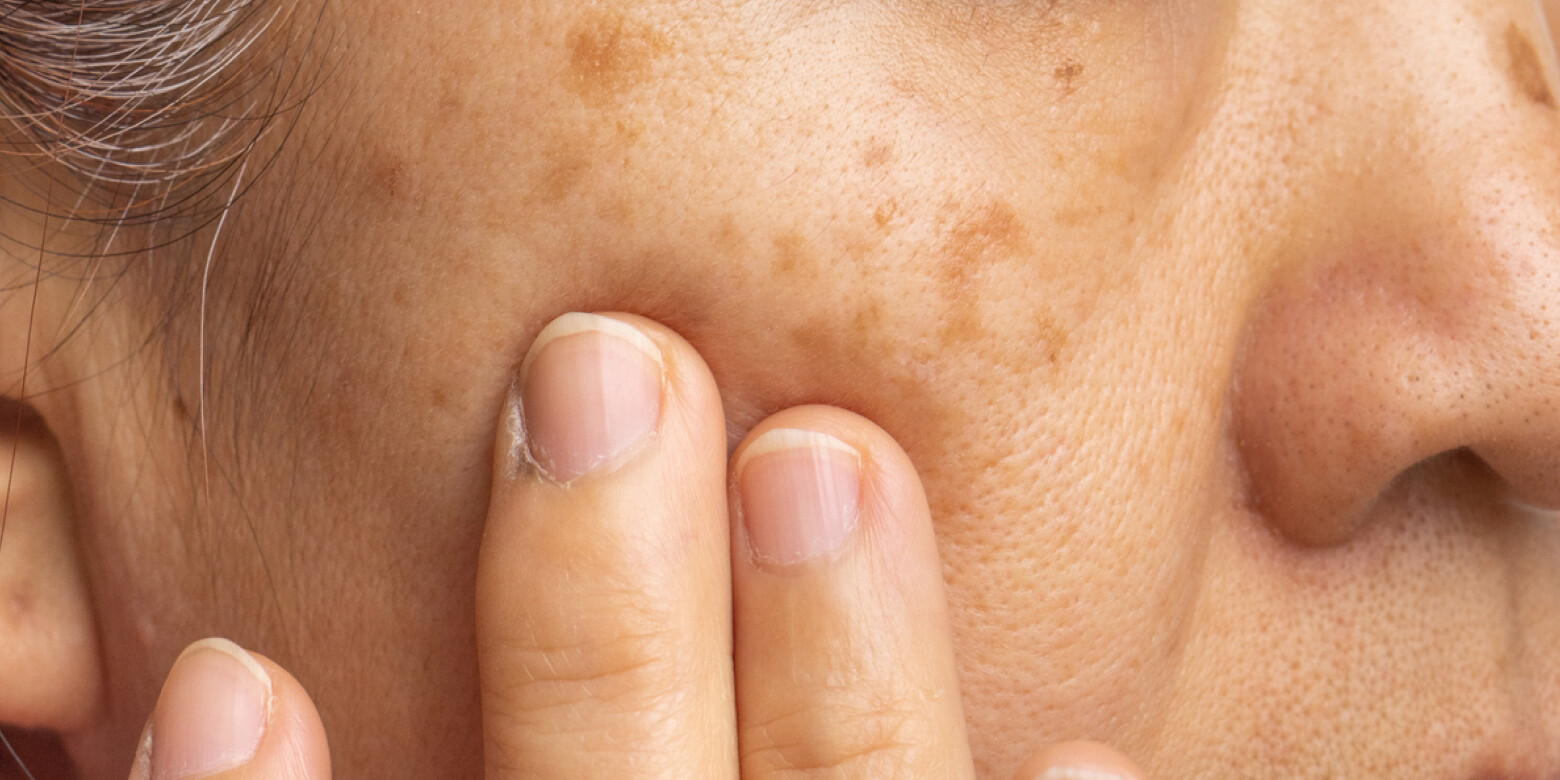
Have you noticed flat, dark or brown spots appearing on your face, hands or shoulders? Although sudden skin changes can sometimes be a cause for concern, these ‘brown spots’ are fairly common and usually harmless.
Read on to understand why your brown spots may have appeared, and the evidence-based methods we use to treat this skin condition.
The Causes Of Brown Spots
There are a few reasons why brown spots, or hyperpigmentation, form. Here are the most common:
Melasma
Melasma (sometimes called chloasma) is believed to occur due to excess melanin production. (1) It usually affects women.
It appears as dark patches on the face, as the result of sun exposure or hormonal changes. (2) For example, up to 50% of women may experience melasma during pregnancy. This is why it’s also known as ‘the pregnancy mask’. Melasma is more common in darker skin types and those who tan easily, but anyone can experience it. (2)
Inflammation
Dark spots may also appear after skin inflammation or injuries to the skin (like acne). (3) These are referred to as a form of post-inflammatory hyperpigmentation (PIH).
You can learn more about hyperpigmentation here.
Age spots
Another cause is age spots, also known as ‘liver spots’, ‘sun spots’ or ‘solar lentigines’. These are flat, tan, brown or black spots that are caused by prolonged sun exposure. (4) Age spots are more common in people over the age of 50, as well as those whose skin burns easily. (5)]
Sun Exposure And UV Damage
While there are many reasons why our skin might age prematurely, sun exposure is responsible for around 80% of that damage. (6) Too much exposure to UV radiation stimulates cells in our skin to increase melanin production (or pigment), which can cause brown spots to form. (7) (5) And, on a more serious note, this can also increase your risk of developing skin cancer. (8)
Upon penetrating the skin, UV rays produce free radicals (also known as oxidative stress), which is a known cause of skin damage. (9) It also weakens the skin’s natural defences by depleting its antioxidants. (10) What’s more, when UV rays penetrate unprotected skin, they also cause the collagen inside (the scaffolding that helps keep the skin looking firm and smooth) to break down at an accelerated rate. (11)
Treatment Options For Brown Spots
Can you reverse sun damage? The damage to our DNA cannot be reversed, but brown spots and collagen damage can be treated using either prescription products and/ or over the counter treatments.
Retinoids
This group of well-researched active ingredients help hyperpigmentation by speeding up the skin’s natural cell turnover. (12) This causes the skin to shed its dead, damaged skin cells, which is where most of the dark spots will appear. This makes way for the formation of new cells.
Two popular prescription retinoids to tackle stubborn brown spots are tretinoin and adapalene.
Clinical studies suggest that tretinoin may help to improve fine lines, uneven skin tone and dark spots, all while boosting collagen production, too. (13) (14) You can see just how transformative it has been for Dermatica customers with this ‘before and after’ here.
If you have sensitive skin with hyperpigmentation, adapalene is a gentler retinoid that works in a similar way to achieve smoother, more even skin.
Hydroquinone
A particularly effective treatment for melasma, hydroquinone helps to fade hyperpigmentation. (15) However, it can only be used for a short period of time. (15) Your licensed dermatology prescriber will tell you how long to use it for and when to take the necessary breaks, to prevent it from damaging your skin’s protective barrier or causing skin irritation.
Tranexamic Acid
Tranexamic acid also targets hyperpigmentation, but in a slightly different way. Rather than removing the damaged skin and triggering collagen synthesis, it interrupts how the skin produces pigment. (16) This helps to brighten and even out skin, but often with less side effects than hydroquinone. (16) And, unlike hydroquinone, it’s gentle enough to use for longer periods of time. (17)
Lifestyle Changes To Reduce Brown Spots
While changes to your daily habits won’t reverse existing sun damage, there are things you can do to prevent it from worsening and to help prevent further hyperpigmentation.
Sun and UV Protection
The most important thing you can do for your skin (with or without hyperpigmentation) is to wear sunscreen every day. This will not only lower your risk of skin cancer but it can also help prevent damage to the skin cells, which can lead to premature skin ageing and pigmentation.
Our dermatology experts recommend you wear broad-spectrum sunscreen (chemical or mineral) with at least SPF 30+ every day. You should also top it up every 2 hours when out in the sun. Covering up with sun-protective clothing and hats can significantly boost your chances of avoiding sun damage, too. (18)
Skincare Routines
We mentioned earlier how UV exposure can damage the skin’s natural antioxidant stores. This means limiting your exposure to sources of UV light, like tanning beds, where possible. Adding the right skin care products to your routine will also help protect your skin from further damage.
Vitamin C
Pure Vitamin C (ascorbic acid) is the science-backed way to neutralise free radicals, reduce oxidative stress on the skin, brighten dark spots and stimulate collagen. (19) We recommend applying our Vitamin C 15%: Fresh Batch Ascorbic Acid every morning before your sunscreen for optimal protection.
Niacinamide
Another way to both improve sun damage and protect the skin from oxidative stress is to add niacinamide into your daily routine. Niacinamide is an active that helps reduce inflammation and pigmentation, while hydrating and protecting the skin barrier. (20) It’s prescribed in many of our personalised formulas and is also used in Soothing Centella Gel Moisturiser and Nourishing Ceramide + Peptide Moisturiser..
Azelaic Acid
Finally, our dermatology experts recommend adding azelaic acid to your skincare arsenal. This multi-tasking ingredient brightens and fades hyperpigmentation like brown spots, and also reduces the appearance of blemishes.
Dark or brown spots most often occur due to hormonal changes, skin conditions and long-term lifestyle factors. However, if you have any concerns about your brown spots or if they’re irregularly shaped, raised or seem to be growing or changing colour, seek urgent medical advice. (22)
If you’re ready to take the next step in your skincare routine, find out which formulas might be suitable for you here.
References
1. Basit H, Godse KV, Al Aboud AM. Melasma [Internet]. PubMed. Treasure Island (FL): StatPearls Publishing; 2023. Available from: https://www.ncbi.nlm.nih.gov/books/NBK459271/
2. Melasma [Internet]. Britishskinfoundation.org.uk. 2026 [cited 2026 Apr 20]. Available from: https://www.britishskinfoundation.org.uk/conditions/melasma
3. Lawrence E, Al Aboud KM. Postinflammatory Hyperpigmentation [Internet]. PubMed. Treasure Island (FL): StatPearls Publishing; 2021. Available from: https://www.ncbi.nlm.nih.gov/books/NBK559150/
4. Choi W, Yin L, Smuda C, Batzer J, Hearing VJ, Kolbe L. Molecular and histological characterization of age spots. Experimental Dermatology. 2017 Feb 9;26(3):242–8.
5. Mayo Clinic. Age spots (liver spots) – Symptoms and causes [Internet]. Mayo Clinic. 2018. Available from: https://www.mayoclinic.org/diseases-conditions/age-spots/symptoms-causes/syc-20355859
6. Flament F, Bazin R, Rubert V, Simonpietri E, Piot B, Laquieze S. Effect of the sun on visible clinical signs of aging in Caucasian skin. Clinical, Cosmetic and Investigational Dermatology [Internet]. 2013 Sep;6:221. Available from: https://www.ncbi.nlm.nih.gov/pmc/articles/PMC3790843/
7. Watson M, Holman DM, Maguire-Eisen M. Ultraviolet Radiation Exposure and Its Impact on Skin Cancer Risk. Seminars in Oncology Nursing [Internet]. 2016 Aug;32(3):241–54. Available from: https://www.ncbi.nlm.nih.gov/pmc/articles/PMC5036351/
8. Ambagaspitiya SS, Appuhamillage GA, Dassanayake RS. Impact of vitamin D on ultraviolet-induced photoaging and skin diseases. Exploration of Medicine [Internet]. 2024 May 20;363–83. Available from: https://www.explorationpub.com/Journals/em/Article/1001225
9. Amaro-Ortiz A, Yan B, D’Orazio J. Ultraviolet Radiation, Aging and the Skin: Prevention of Damage by Topical cAMP Manipulation. Molecules [Internet]. 2014 May 15;19(5):6202–19. Available from: https://www.ncbi.nlm.nih.gov/pmc/articles/PMC4344124/
10. Hussen NH amin, Abdulla SK, Ali NM, Ahmed VA, Hasan AH, Qadir EE. Role of antioxidants in skin aging and the molecular mechanism of ROS: A comprehensive review. Aspects of Molecular Medicine [Internet]. 2025 Jan 4;5:100063. Available from: https://www.sciencedirect.com/science/article/pii/S2949688825000012
11. Brar G, Dhaliwal A, Brar AS, Manasa Sreedevi, Ahmadi Y, Irfan M, et al. A Comprehensive Review of the Role of UV Radiation in Photoaging Processes Between Different Types of Skin. Cureus [Internet]. 2025 Mar 24;17(3). Available from: https://www.cureus.com/articles/341779-a-comprehensive-review-of-the-role-of-uv-radiation-in-photoaging-processes-between-different-types-of-skin
12. Zasada M, Budzisz E. Retinoids: active molecules influencing skin structure formation in cosmetic and dermatological treatments. Advances in Dermatology and Allergology [Internet]. 2019 Aug;36(4):392–7. Available from: https://www.ncbi.nlm.nih.gov/pmc/articles/PMC6791161/
13. Balado-Simó P, Morgado-Carrasco D, Gómez-Armayones S, López-Ferrer A, Barco D, Ferrándiz-Pulido C, et al. An Updated Review of Topical Tretinoin in Dermatology: From Acne and Photoaging to Skin Cancer. Journal of Clinical Medicine [Internet]. 2025 Nov 10;14(22):7958. Available from: https://www.mdpi.com/2077-0383/14/22/7958
14. Sitohang IBS, Makes WI, Sandora N, Suryanegara J. Topical tretinoin for treating photoaging: A systematic review of randomized controlled trials. International Journal of Women’s Dermatology. 2022 Mar;8(1):e003
15. Schwartz C, Jan A, Zito PM. Hydroquinone [Internet]. PubMed. Treasure Island (FL): StatPearls Publishing; 2023. Available from: https://www.ncbi.nlm.nih.gov/books/NBK539693/
16. Gaćina K. The Use of Tranexamic Acid in Dermatology. Acta Clinica Croatica. 2023 Jan 1;
17. Konisky H, Balazic E, Jaller JA, Khanna U, Kobets K. Tranexamic acid in melasma: A focused review on drug administration routes. Journal of Cosmetic Dermatology. 2023 Jan 6;22(4):1197–206.
18. Gabros S, Zito PM. Sunscreens And Photoprotection [Internet]. Nih.gov. StatPearls Publishing; 2019. Available from: https://www.ncbi.nlm.nih.gov/books/NBK537164/
19. Firas Al-Niaimi, Yi N. Topical Vitamin C and the Skin: Mechanisms of Action and Clinical Applications. The Journal of Clinical and Aesthetic Dermatology [Internet]. 2017 Jul;10(7):14. Available from: https://pmc.ncbi.nlm.nih.gov/articles/PMC5605218/
20. Marques C, Hadjab F, Porcello A, Lourenço K, Scaletta C, Abdel-Sayed P, et al. Mechanistic Insights into the Multiple Functions of Niacinamide: Therapeutic Implications and Cosmeceutical Applications in Functional Skincare Products. Antioxidants [Internet]. 2024 Apr 1;13(4):425. Available from: https://www.mdpi.com/2076-3921/13/4/425
21. Sauer N, Małgorzata Oślizło, Brzostek M, Wolska J, Katarzyna Lubaszka, Katarzyna Karłowicz-Bodalska. The multiple uses of azelaic acid in dermatology: mechanism of action, preparations, and potential therapeutic applications. Postępy Dermatologii i Alergologii [Internet]. 2023 Jan 1;40(6):716–24. Available from: https://www.ncbi.nlm.nih.gov/pmc/articles/PMC10809820/
22. NHS. Symptoms of non-melanoma skin cancer [Internet]. nhs.uk. 2023. Available from: https://www.nhs.uk/conditions/non-melanoma-skin-cancer/symptoms/
Last updated: 20th May 2026


Related Posts
October 30, 2025
0 Comments11 Minutes