Ask a Derm: Can Hyaluronic Acid Help Your Scalp + Hair?
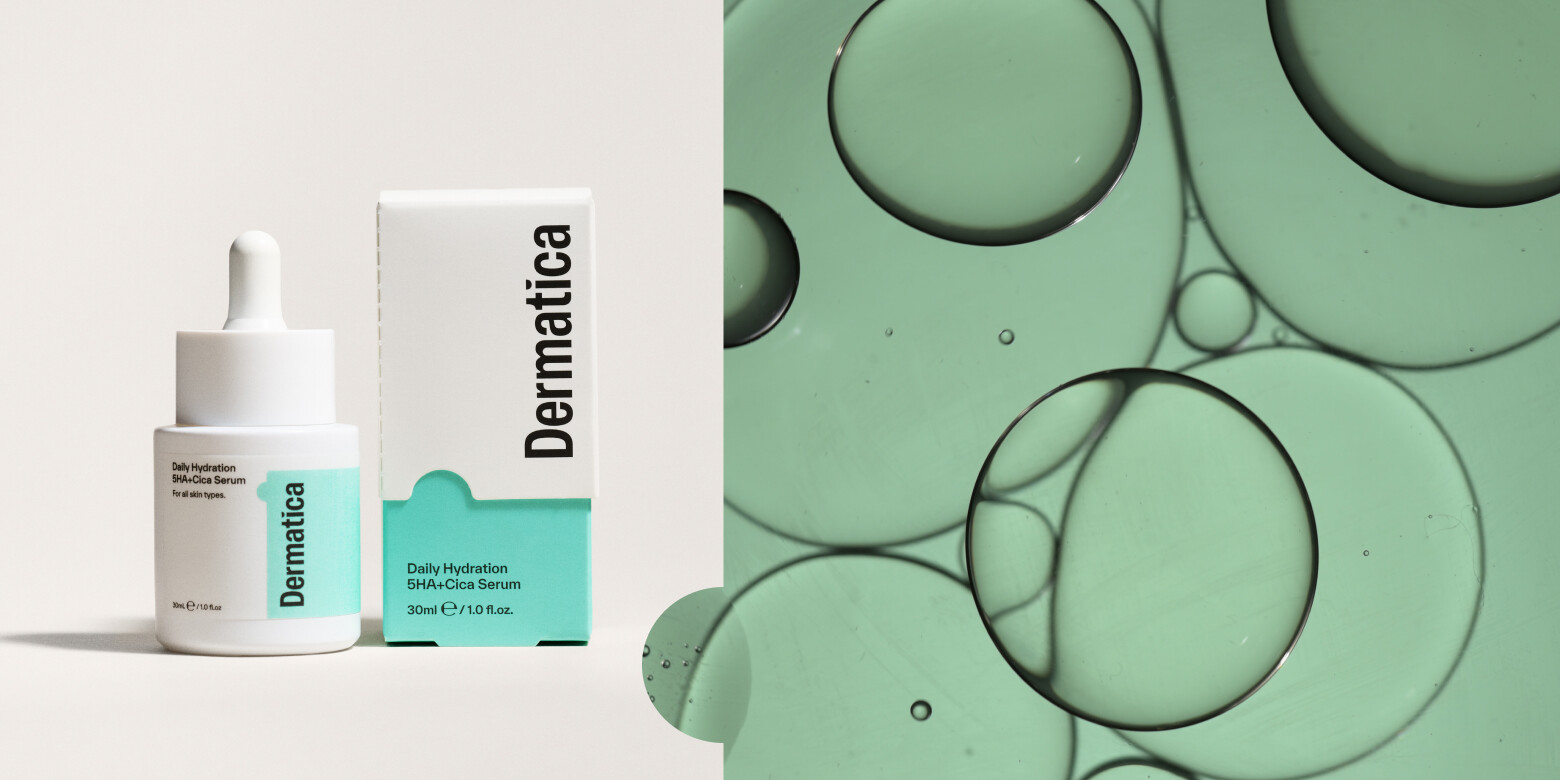
Hyaluronic acid. From toners and body lotions, to hair conditioners and scalp soothers, it’s the ingredient that’s famously suitable for every skin and hair type. Since Dermatica released its Daily Hydration 5HA+Cica Serum, we’ve received more questions from women than ever about how to use it for their skin and hair care routines.
While it’s better known in the skincare world, hyaluronic acid is cropping up in haircare aisles too. So let’s introduce it to you properly. No hype, no sales pitch, just what hyaluronic is and when to use it.
What’s Hyaluronic Acid?
Unlike other ‘acids’ used in skincare (like AHAs or PHAs), hyaluronic acid is already present throughout our bodies. It keeps joints lubricated and skin hydrated, and in topical products like serums and creams, it’s added as a humectant.
One single hyaluronic acid molecule can hold around a thousand times its weight in water. That’s how it draws in moisture from the serums, moisturizers and masks you apply on top — keeping your skin hydrated, plump, and comfortable, day and night. [1]
What’s a Humectant?
A humectant describes a substance that binds water molecules to itself from the surrounding environment. They act like a magnet, helping with hydration and keeping moisture in the skin. Other examples of humectants include glycerin, aloe vera and panthenol. [2]
Hyaluronic Acid in Skincare
In skincare routines, products often contain hyaluronic acid or the smaller, lower weight derivative called sodium hyaluronate. They’re used to attract moisture in skin cells, plumping the appearance of fine lines, and giving you a healthier-looking complexion overall.
Who it’s for: Almost everyone. It’s especially helpful if your skin feels dry, tight, or looks dull. Combination and oily skin types may also find it useful, as hyaluronic acid helps rebalance sebum production in the skin, too. [3]
When to use it: After cleansing and before any other skincare. Once absorbed, follow up with a treatment (if using) and moisturiser to lock in the hydration.
How to use it: Apply a hydrating hyaluronic acid serum like our Daily Hydration 5HA + Cica Serum to cleansed, dry skin. Its lightweight texture should absorb quickly, helping to support your skin barrier and rebalance moisture.
Why Hyaluronic Acid in Haircare?
Hydration isn’t just essential for your face, but further up on your scalp and hair, too. It’s why hyaluronic acid is no stranger to dermatologist-backed hair care routines.
Balanced scalp: Like skin, your scalp has a barrier that can also get dry or irritated from harsh products, weather or lifestyle factors like stress. Hyaluronic acid helps rebalance your scalp barrier’s moisture levels, reducing feelings of tightness, itchiness and flaking.
Hydrated hair: Dryness, frizz and hair damage are among the top concerns for women. By drawing moisture into the hair fibres, hyaluronic acid conditioners can smooth the cuticle along the hair length, boost shine and make drier hair types look and feel softer. [4]
Should you try it?
Our honest take? There’s almost no reason not to. For one, the potential for an allergic reaction is very low. Two, it suits all skin types, whether your skin feels balanced, too dry, or oilier than usual. It’s also a smart choice if you’re looking for skincare that leaves skin looking plumper and smoother. [5]
When it comes to hair care routines, hyaluronic acid excels at deep hydration. By drawing water into the scalp barrier and hair strands, it helps keep hair lengths softer and shinier, and leaves your scalp feeling more comfortable. To stop itching or irritation, look for lightweight hair products that are designed for daytime use. And if it’s combined with skin-soothing ingredients like allantoin? Even better. [6]
Find out which products and formulas are suitable for your skin via our website.
References
1. Walker K, Basehore BM, Zito PM. Hyaluronic Acid [Internet]. Nih.gov. StatPearls Publishing; 2023. Available from: https://www.ncbi.nlm.nih.gov/books/NBK482440/
2. Crowther JM. Understanding humectant behaviour through their water‐holding properties. International Journal of Cosmetic Science. 2021 Aug 4;43(5):601–9.
3. Bravo B, Correia P, Gonçalves Junior JE, Sant’Anna B, Kerob D. Benefits of topical hyaluronic acid for skin quality and signs of skin aging: From literature review to clinical evidence. Dermatologic Therapy. 2022 Oct 21;35(12).
4. Qu W, Guo X, Xu G, Zou S, Wu Y, Hu CY, et al. Improving the Mechanical Properties of Damaged Hair Using Low-Molecular Weight Hyaluronate. Molecules [Internet]. 2022 Nov 9;27(22):7701–1. Available from: https://www.ncbi.nlm.nih.gov/pmc/articles/PMC9695591/
5. Walker K, Basehore BM, Zito PM. Hyaluronic Acid [Internet]. Nih.gov. StatPearls Publishing; 2023. Available from: https://www.ncbi.nlm.nih.gov/books/NBK482440/
6. Federica Dall’Oglio, Tedeschi A, Guardabasso V, Micali G. Evaluation of a Topical Anti-inflammatory/Antifungal Combination Cream in Mild-to-moderate Facial Seborrheic Dermatitis: An Intra-subject Controlled Trial Examining Treated vs. Untreated Skin Utilizing Clinical Features and Erythema-directed Digital Photography. The Journal of Clinical and Aesthetic Dermatology [Internet]. 2015 Sep [cited 2025 Sep 26];8(9):33. Available from: https://pmc.ncbi.nlm.nih.gov/articles/PMC4587893/


Related Posts
October 30, 2025
0 Comments11 Minutes
Ask a derm: Should I use Retinal, or go straight to a Personalised Formula?