Tranexamic Acid Side Effects In Skincare: Common Issues And Solutions
Tranexamic acid (TXA) is increasingly supported by research as an effective treatment for melasma and hyperpigmentation. (1) It works by inhibiting pathways involved in excess pigment (melanin) production and it helps limit inflammation in the skin, which can trigger or worsen pigmentation. (2) And, because it’s available over the counter (OTC), you don’t need a prescription to add it to your regular skincare routine.
Although tranexamic acid is suitable for most skin types, including sensitive and rosacea-prone skin, some people might experience side effects. (3) This blog post will explain what these side effects are. We’ll tell you what to watch out for, and how to make sure your skin isn’t having an adverse reaction to this topical active ingredient.
Why Choose Tranexamic Acid To Treat Hyperpigmentation?
Before now, facial pigmentations like melasma and post-inflammatory hyperpigmentation (PIH) could only be treated with a topical prescription, expensive chemical peels or laser therapy. Fortunately, more science-backed brands are working closely with dermatologists to design cosmetic skincare with ingredients that can help fade pigmentation. Some of these at-home topical treatments, like tranexamic acid, are also suitable to be used daily once your skin has adapted. (2)
Tranexamic acid is generally safe even for sensitive skin types, and is commonly used for hyperpigmentation conditions like the treatment of melasma, rosacea, sun spots and dark spots. (4) (2) And, unlike hydroquinone, it doesn’t require any downtime, so you don’t need to take any breaks while using it. (5)
Can You Combine Tranexamic Acid With Other Actives?
Topical tranexamic acid can be safely combined with certain actives to enhance overall effectiveness. For example, ingredients like retinoids for skin renewal; barrier-strengthening brighteners like niacinamide and vitamin C; or kojic acid for inhibiting pigment (melanin) production. (2) (6) (7)
If you’re not sure which combination is right for you, ask your dermatology expert for guidance.
What Are The Most Common Side Effects of Tranexamic Acid in Skincare?
Like almost all skincare ingredients, tranexamic acid can occasionally cause unwanted side effects, particularly if you combine it with multiple active ingredients at once. If you have a history of skin reactions, we recommend doing a patch test before adding this ingredient into your routine.
The most common potential side effects of tranexamic acid are listed below.
Skin Irritation
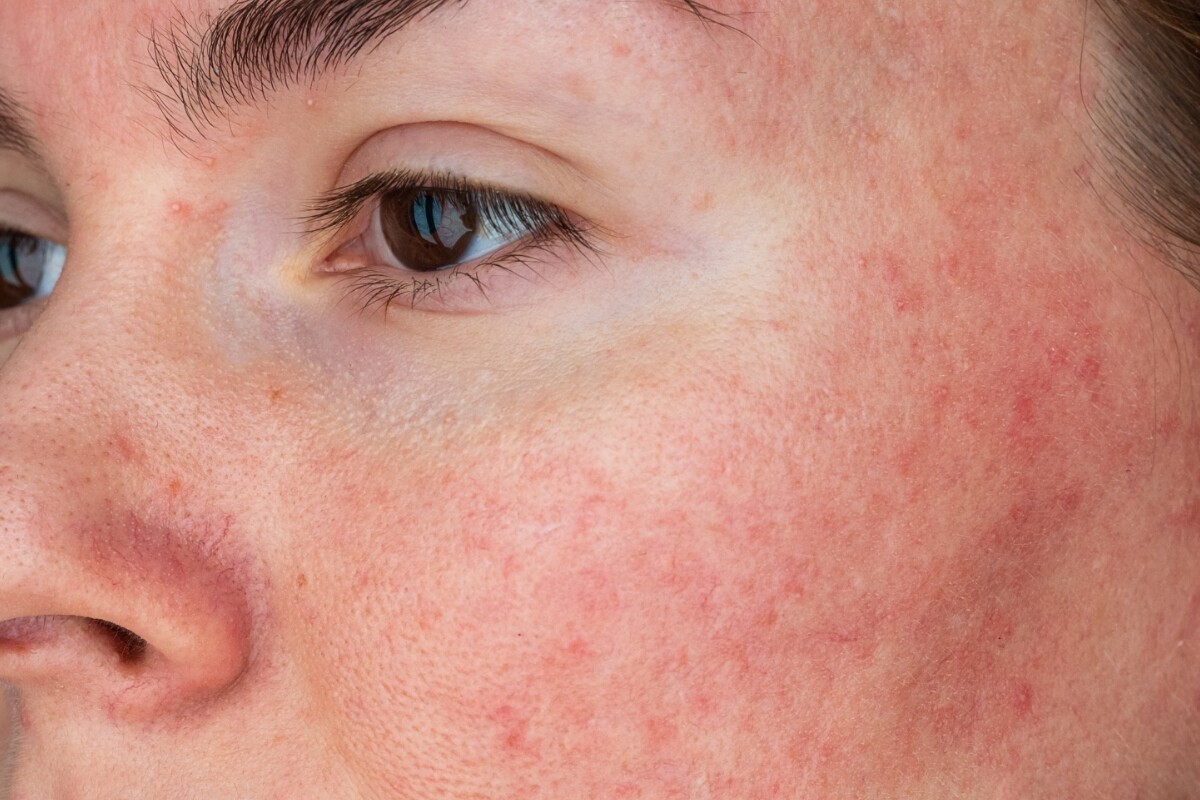
Redness, mild itching and skin dryness can sometimes occur in the areas you apply tranexamic acid. (2) (4) If you develop skin irritation while using tranexamic acid, you can either reduce frequency of application or temporarily stop using the product, and apply a barrier repairing moisturiser like Nourishing Ceramide + Peptide Moisturiser to help your skin settle. You can then consider reintroducing the product gradually once your skin has recovered.
Allergic Reactions
Though reported instances are rare, tranexamic acid can cause allergic reactions, such as severe itching, swelling, hives or a rash. (2) If you experience an allergic reaction, stop using the product immediately and contact your healthcare provider for further guidance.
Remember, reactions like these can trigger inflammation in the skin which is a key driver of collagen breakdown, skin barrier dysfunction and pigment changes. (8) Using active ingredients you’re allergic to, or at strengths beyond your tolerance, can damage the skin barrier and have the opposite effect of what you’re aiming for. (9)
Is Tranexamic Acid High-Risk?
No. Tranexamic acid is known to be a safer treatment for melasma and hyperpigmentation than other brightening active ingredients like hydroquinone, which is only appropriate for short-term use. (10)
However, if you’re concerned or you already have a lot of active ingredients in your routine, it’s always a good idea to consult with a professional who can assess your skin, like our dermatology experts at Dermatica. We can take a broader look at your full routine to assess if tranexamic acid is right for you.
And remember to always wear a broad-spectrum sunscreen (SPF 30+) during the day, like our SPF50 Photodamage Defence Sunscreen. This helps prevent any hyperpigmentation from worsening.
Who Shouldn’t Use Tranexamic Acid?
If You Have An Active Skin Condition Like Acne Or Eczema
Tranexamic acid may make inflammatory skin conditions like eczema, acne or psoriasis worse. These conditions can leave behind pigmented marks, known as post-inflammatory hyperpigmentation, once the skin has settled. At this stage, you can consider using tranexamic acid to help fade these marks over time.
If You Have Highly Sensitive Or Reactive Skin
As with any active ingredient, people with highly sensitive skin may be more prone to irritation. Again, it’s worth doing a patch test if you fall into this category to avoid disrupting your skin barrier. (11)
If You Don’t Have Hyperpigmentation
If you do not currently have hyperpigmentation and are not using other active ingredients for specific skin concerns, you may still consider tranexamic acid to help maintain an even skin tone.
However, if you have other skin concerns and you’re not sure which treatment to use, visit our website to find out more about active ingredients and how we design treatment plans to help people reach their skin goals.
References
1. AlJabr A, Aseel Muhana I. AlAnazi, Abdulkarim R. Tranexamic Acid for Hyperpigmentation Disorders: A Literature Review on Efficacy and Safety in Melasma and PIH. Journal of Cosmetic Dermatology [Internet]. 2026 Jan 28 [cited 2026 Feb 1];25(2):e70692–2. Available from: https://pmc.ncbi.nlm.nih.gov/articles/PMC12848551/
2. What Can Tranexamic Acid Do for Your Skin? [Internet]. Healthline. 2022. Available from: https://www.healthline.com/health/beauty-skin-care/tranexamic-acid-for-skin
3. Ebrahimi B, Naeini FF. Topical tranexamic acid as a promising treatment for melasma. Journal of Research in Medical Sciences : The Official Journal of Isfahan University of Medical Sciences [Internet]. 2014 Aug 1;19(8):753–7. Available from: https://www.ncbi.nlm.nih.gov/pmc/articles/PMC4235096/
4. Kamal S, Doaa Salah Hegab, El M, Ashmawy AA. Efficacy and Safety of Topical Tranexamic Acid Alone or in Combination with Either Fractional Carbon Dioxide Laser or Microneedling for the Treatment of Melasma. Dermatology practical & conceptual [Internet]. 2023 Jul 31;e2023195–5. Available from: https://www.ncbi.nlm.nih.gov/pmc/articles/PMC10412040/
5. Konisky H, Balazic E, Jaller JA, Khanna U, Kobets K. Tranexamic acid in melasma: A focused review on drug administration routes. Journal of Cosmetic Dermatology. 2023 Jan 6;22(4):1197–206.
6. Sanadi RM, Deshmukh RS. The effect of Vitamin C on melanin pigmentation – A systematic review. Journal of Oral and Maxillofacial Pathology : JOMFP [Internet]. 2020;24(2):374–82. Available from: https://www.ncbi.nlm.nih.gov/pmc/articles/PMC7802860/?report=printable
7. Kaikati J, Nizar El Bcherawi, Khater JA, Dib SM, Kechichian E, Helou J. Combination Topical Tranexamic Acid and Vitamin C for the Treatment of Refractory Melasma. The Journal of Clinical and Aesthetic Dermatology [Internet]. 2023 Jul;16(7):63. Available from: https://pmc.ncbi.nlm.nih.gov/articles/PMC10409511/
8. Agrawal R, Hu A, Bollag WB. The Skin and Inflamm-Aging. Biology. 2023 Nov 2;12(11):1396–6.
9. Ballard A. Skin Barrier Basics for People With Eczema [Internet]. National Eczema Association. 2021. Available from: https://nationaleczema.org/blog/what-is-my-skin-barrier/
10. González-Molina V, Martí-Pineda A, González N. Topical Treatments for Melasma and Their Mechanism of Action. The Journal of Clinical and Aesthetic Dermatology [Internet]. 2022 May 1;15(5):19–28. Available from: https://www.ncbi.nlm.nih.gov/pmc/articles/PMC9122278/
11. Lazzarini R, Duarte I, Ferreira AL. Patch tests. Anais Brasileiros de Dermatologia [Internet]. 2013 Dec;88(6):879–88. Available from: https://www.ncbi.nlm.nih.gov/pmc/articles/PMC3900336/

Caroline Ferry
Caroline Ferry is a freelance journalist and copywriter, who has written for Grazia Magazine, Harper's Bazaar, Tatler and Elle and consults for many skincare, fragrance and fashion brands.

Related Posts