Minoxidil: How Does It Work for Hair Loss?
Shampoos, scalp serums, microneedles… there’s no shortage of products that promise thicker, fuller hair. But when it comes to treating hair loss, few over-the-counter options have as much clinical evidence as minoxidil.
We’re discussing topical minoxidil today, including how it works, and is it right for you? Let’s break it down.
What is minoxidil?
Minoxidil is a clinically proven active ingredient used in topical treatments for certain types of hair loss. It was originally developed as a medication for high blood pressure, but researchers soon came across an unexpected side effect: hair growth.[1]
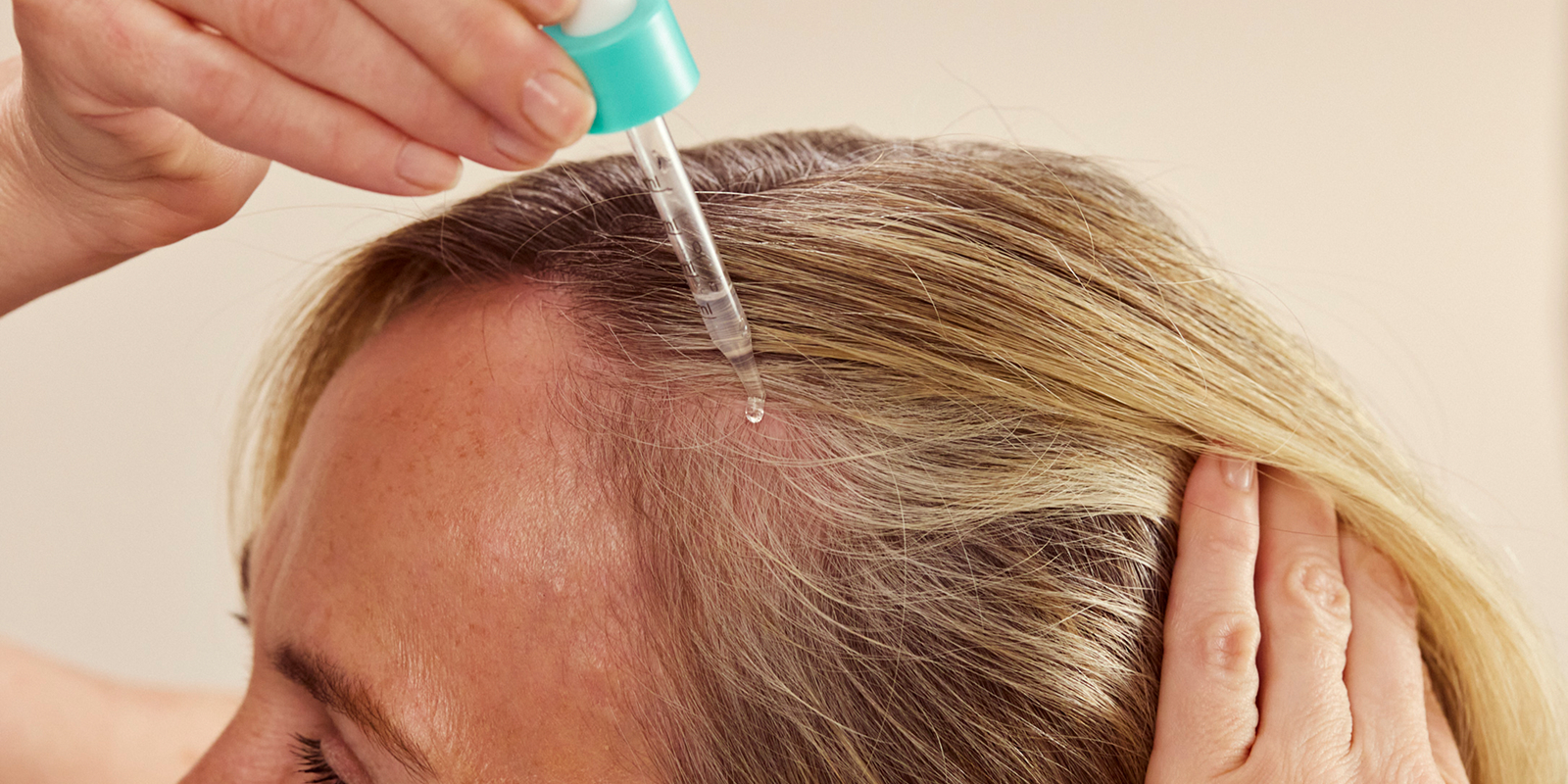
That discovery led to its use in treating hair thinning and pattern hair loss (also known as androgenetic alopecia or AA). Minoxidil is now available over the counter in various strengths, usually as a foam or liquid that’s applied directly to the scalp.
How does it actually work?
Minoxidil works by improving blood flow to your hair follicles, delivering more oxygen and nutrients to your scalp. This helps create a healthier environment for hair growth.
It also helps extend the anagen (or growth) phase of the hair cycle, and can help reactivate follicles that have become dormant. In simpler terms: it can help you hold on to existing hair for longer, while encouraging new strands to grow. [2]
Why scalp health matters
Think of your scalp as the soil that supports your hair. If your scalp is dry, inflamed or irritated, it can affect how well treatments like topical minoxidil work. A weakened or compromised scalp can even contribute to hair shedding in the first place. [3]
How long does it take to see results?
Hair growth takes time, and consistency is key. Most people need to use minoxidil daily for at least 3–6 months before noticing a difference. Regrowth tends to be gradual, with improvements in density and reduced shedding over time. Clinical trials in female pattern hair loss patients who were treated with 2% or 5% minoxidil showed a remarkable increase in hair growth, and decrease in hair loss. Superior results were found with the 5% formulation.
Not everyone responds to topical minoxidil in the same way. Around 30% of users see noticeable regrowth, while others may experience slower progress or stabilisation of their hair loss. [4]
Are there any side effects?
Most people tolerate minoxidil well, [3] but some may experience side effects such as:
– Scalp dryness or irritation
– Flaking or redness
– An initial increase in shedding (this is temporary and usually settles within a few weeks)
It’s always a good idea to speak to a healthcare professional if you’re unsure, or if side effects still persist.
How does it compare to other treatments?
Minoxidil is one of the few widely available hair loss treatments that’s been studied in randomised, controlled clinical trials. That makes it distinct from many shop-bought solutions, which often rely on self-reported results or low-quality evidence.
You may have seen ingredients like rosemary oil or saw palmetto trending on social media. While some early research exists for these ingredients, the results are mixed — and often not strong enough to draw clear conclusions.
Supplements like biotin and marine collagen are commonly marketed for hair health. While they aren’t clinically proven to treat female pattern hair loss on their own, they support the body’s natural processes. Especially if your hair loss is linked to nutrient deficiencies, stress, or inflammation.
Our Collagen Complex combines marine collagen peptides with Vitamin C, biotin, zinc and selenium. While it’s not a treatment, supplementing these nutrients can contribute to the maintenance of normal hair, skin and nails. And support your overall hair health as part of your daily routine.
Should I try it?
If you’re noticing gradual hair thinning or increased shedding, topical minoxidil might be a good place to start. It’s most effective for people experiencing early-stage hair loss, as treatments are more effective for stopping hair loss from progressing than stimulating regrowth. Treatments also work best when used consistently as part of a long-term plan. [4]
At Dermatica, our dermatology experts know that no two journeys are the same. That’s why our dermatology team can help you find a plan for your needs. Find out if a formula is suitable for you via our website.
References
1. Suchonwanit P, Thammarucha S, Leerunyakul K. Minoxidil and its use in hair disorders: a review. Drug Design, Development and Therapy. 2019 Aug;Volume 13:2777–86.
2. Hussein RS, Salman Bin Dayel, Othman Abahussein, Abeer Ali El‐Sherbiny. Applications and efficacy of minoxidil in dermatology. Skin Health and Disease. 2024 Nov 24;4(6).
3. Trueb R, Henry J, Davis M, Schwartz J. Scalp condition impacts hair growth and retention via oxidative stress. International Journal of Trichology [Internet]. 2018;10(6):262. Available from: http://www.ijtrichology.com/article.asp?issn=0974-7753;year=2018;volume=10;issue=6;spage=262;epage=270;aulast=Trueb
4. Lucky AW, Piacquadio DJ, Ditre CM, Dunlap F, Kantor I, Pandya AG, et al. A randomized, placebo-controlled trial of 5% and 2% topical minoxidil solutions in the treatment of female pattern hair loss. Journal of the American Academy of Dermatology [Internet]. 2004 Apr 1;50(4):541–53. Available from: https://pubmed.ncbi.nlm.nih.gov/15034503/
5. Fabbrocini G, Cantelli M, Masarà A, Annunziata MC, Marasca C, Cacciapuoti S. Female pattern hair loss: A clinical, pathophysiologic, and therapeutic review. International Journal of Women’s Dermatology. 2018 Dec;4(4):203–11.
Last updated 25th February 2025


Related Posts