One of the most common non-medical questions our Dermatica experts get asked is how to banish dark circles around the eyes. And this makes sense given we all notice them occasionally, whether that’s because of sleepless nights, jetlag, work, or simply our own genes.
Just as there are a slew of reasons why we might get them in the first place, there are also different types of dark circles that we can get. So to help you better understand why there’s no simple, single treatment for dark circles under the eyes, we’ll explain how our dermatology experts identify which type a person has, and which treatments they would recommend.
What causes dark circles under the eyes?
There are a few common causes of dark circles that we know about, and it helps to know what’s causing them before you look into treatment. However, most of us with dark circles under the eyes have a combination of causes going on.
Pigmentation
One of the main causes is pigmentation, and this is medically known as periorbital dark circles. This is due to excessive pigment production around the eyes. [1]
Vascular
Another cause is vascular visibility, a type that we call infraorbital dark circles in medicine. It’s recognised by thin eyelid skin that can make our blood vessels look more prominent. [2]
Structural shadowing
Some dark circles are just due to the shape or bone structure of a person’s face. This type is also called infraorbital dark circles. The anatomy of some people’s facial features may cause the areas under their eyes to reflect light in a way that makes your under-eye area look more hollow. This can make the area around your orbital bone seem darker.
Factors that make dark circles appear more prominent
While they don’t necessarily cause dark circles in the first place, there are other contributing factors that can make them more noticeable.
Skin thinning and ageing
If you didn’t have dark circles when you were younger and you’re now noticing them, it may just be down to ageing. As you age, you gradually lose collagen, causing the skin to get thinner and looser. This allows the blood vessels underneath to show through more easily, making your under-eye area look darker.
Lack of sleep and dehydration
We all know sleep and hydration are both important for our skin, and it’s the same case for dark circles. Poor sleep can make the skin look paler, allowing blood vessels to appear more noticeable. Dehydration can also cause dullness and make the skin under your eyes appear more hollow and shadowed. Other lifestyle factors can have an impact too, such as smoking and alcohol.
Iron deficiency
Though it’s less common, it’s thought that iron deficiency (also known as anaemia) could deepen the appearance of dark circles under your eyes too. This is mainly because it can cause pallor, making you look pale so the shadows appear more clearly. It can also cause fatigue, which could make your eye area look more dull.
Identifying which type of dark circles you have
You may be curious about which type of dark circles you have, or how to tell if the causes are due to a combination of factors. So here are some basic ways that you can tell at home.
Pigmented type
This type is characterised by a band or rim that’s a darker brown tone or hue under the eye.
It’s a form of pigmentation where a darker pigment is produced within the skin around the orbital bone. We usually notice this type more in people of colour or darker skin types. This variation may be just how your skin looks normally, as people with darker, more melanin-rich skin tend to produce more pigment in general. Sometimes pigmented eye areas can run in families, too.
Rubbing or scratching itchy skin around your eyes, over time, can also cause some people’s skin to produce too much pigment. Inflammatory conditions like eczema, eyelid dermatitis, inflammation of the eyelid, or allergic reactions cause you to rub your eyes. The inflammation that comes from this irritation can often lead to post-inflammatory hyperpigmentation. Left untreated, these can all contribute to darker under-eye circles.
It’s also worth noting that extensive sun exposure and melasma may result in dark eye circles, too, as UV will also increase melanin production. [3]
Vascular type
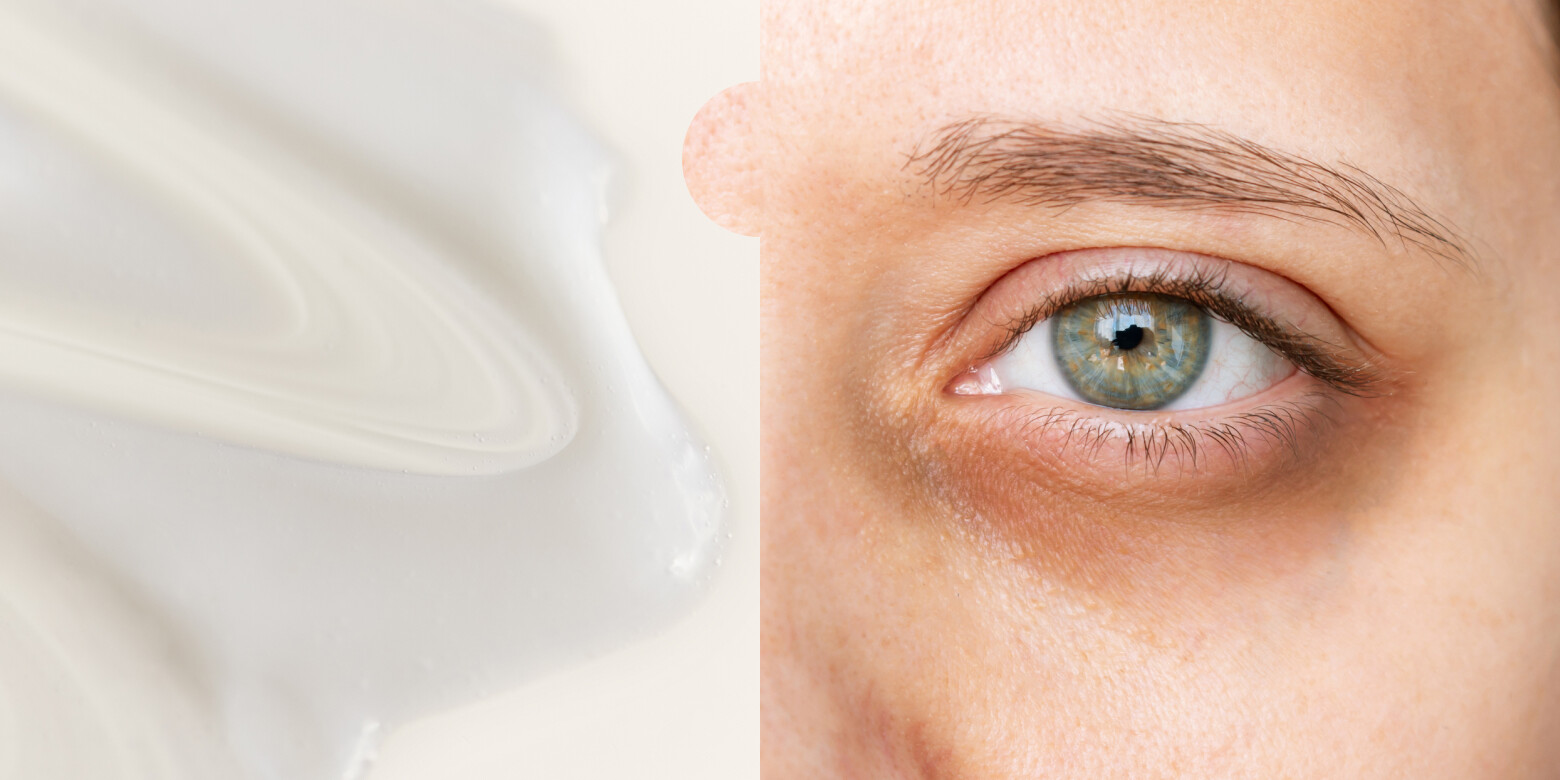
Vascular under eye circles show up as a blue, pink or purple hue under the eyes (depending on your skin colour and undertone). Because you’ll likely have thinner eyelid skin, the tiny blood vessels under the surface look more prominent. This is the reason for the darker colour.
This type of dark circle is often associated with puffiness of the lower eyelid, too. Puffy eyelids can lead to more vascular congestion in that area, making your dark circles more obvious. [4]
Unlike the other types, vascular dark circles are made worse by lifestyle factors like sleep deprivation and salty food before bed, both of which can lead to congestion in the eye area. [2]
Structural type
The contours of our facial features can also lead to dark circles, as this can contribute to hollowing or darkening of our under eyes around our tear troughs. The tear trough is the sunken area between our lower eyelid and our cheekbone. [5]
This type can affect anyone of any age, but they can become more obvious as we get older. Our skin naturally loses volume as we age, which causes structural changes to the fat pads in our face, as well as our bones. That’s why structural dark circles are one of the most common types we see. Some of us just have them, and some of us get them with time. [2]
A quick test to try at home
Want to check which type of dark eye circles you have? Here’s a test you can try. Keep in mind it isn’t foolproof, but you might get an idea of the root causes of your eye circles.
Position yourself in front of a mirror. Use your finger to gently tug your lower eyelid down with a small amount of pressure. This movement should change the contours of your lower eyelid.
Watch how the light reflects off your lower eyelid. If you have structural eye circles, you should notice an improvement in their appearance.
For people with vascular congestion, you won’t notice any improvement, and you might notice it gets worse (temporarily of course). This is because the slight pressure you’re using decreases blood flow, causing more congestion.
If you have eye circles due to pigmentation, you won’t notice any change at all.
Treatment options for dark under eye circles
How you treat dark circles will differ based on the type you have. Here we’ll break down your best options for reducing the appearance of under-eye circles depending on their cause.
For dark circles caused by pigmentation
If your under eye circles are caused by pigmentation, you’ll want to treat any underlying inflammation and get that under control first. If you don’t, unfortunately, any treatment will be pointless because your body will continue to produce too much pigment (melanin).
Once your inflammation has cleared up, look for skincare with science-backed brightening properties, as this will help to gently fade and even out excess melanin. Fragrance free is best, as perfumes can be irritating and your eyelid is more sensitive than the rest of your face.
Make sure any product you use is suitable for around the eye, as your eyelid skin is more delicate than other areas of the face. Some products might be too harsh.
Active ingredients
A dermatologist or dermatology expert, like our team at Dermatica, may recommend effective ingredients like retinoids. These are helpful but can be irritating around the thinner skin of the delicate under eye area, unless they’re specifically designed for this purpose.
When using active ingredients around your eyes, always follow personalised guidance from a licensed dermatology professional so you don’t cause more inflammation and make your pigmentation worse.
For gentler, over-the-counter solutions, look for products with:
Vitamin C: This topical vitamin not only has unbeatable brightening properties, it also boosts the effectiveness of your sunscreen and stimulates collagen production.
Niacinamide: This antioxidant improves skin brightness and hydration, and when combined with hyaluronic acid it plumps and improves the appearance of fine lines. Find it in our Hydrating Hyaluronic Acid + Vit B5 Serum.
Sunscreen: Wearing sunscreen around the eye area is a must if you have pigmentation. We know pigmentation worsens from chronic sun exposure, so use your favourite sunscreen that doesn’t burn or irritate your eyes. There are eye creams with SPF in them, but make sure it’s broad-spectrum and protects from UVA/UVB rays like our SPF50 Photodamage Defence Sunscreen. Wearing sunglasses with UV protection will also help. [3]
For dark circles caused by vascular visibility
There’s no way to truly, effectively improve vascular dark circles with topical skincare alone.
Using topical creams with retinoids and peptides can help plump and bulk up the eyelid area, by enhancing collagen production and improving your skin’s overall thickness. But generally they won’t dramatically change your dark circles because your eyelid skin is much thinner than the rest of your face.
To even out your overall skin tone day to day, makeup such as colour correctors and concealers are effective at concealing the prominent blood vessels from your dark circles. If you notice your under-eye circles darken from lack of sleep or when you eat salty food, making sure you get enough rest and eating a more balanced diet may help. However, aesthetic treatments like tear trough fillers are going to be the most helpful option. [4]
For dark circles caused by structural shadowing
Because this type of dark under eye circles is only down to the natural, anatomical contours of your face, cosmetic rejuvenation like the fillers we mentioned above are the most effective option. Skincare and eye creams won’t hurt of course, but they can’t change the shape of your face, so they won’t provide any significant improvements. [4]
For dark circles affected by lifestyle factors
If your under-eye circles are being worsened by poor sleep, dehydration, or fatigue, topical products aren’t going to cut it. They can help to plump, smooth and brighten the eye area, but lifestyle changes are where you’ll really see a difference. Prioritise getting plenty of good sleep, hydrating well throughout the day, and speak to your doctor if you think you’re deficient in iron or vitamins.
How to prevent dark circles under your eyes
As you’ll now know, the causes of dark circles mean that they can’t always be prevented. But there are things you can do to help reduce their appearance as you age. That includes getting plenty of sleep, staying well hydrated, and wearing sunglasses and sun protection. Using topical products to keep the delicate skin under your eyes hydrated can help, too.
So to sum up, most of us get dark under eye circles. They’re so common in fact, that we sometimes get them regardless of our age, lifestyle habits, skincare routine or skin type. There are also different types and causes of dark circles, so treating them doesn’t always have one answer.
Understanding what causes yours can help you find the most effective treatment route for you. And while brightening and collagen-boosting skincare can help pigmented types, vascular and structural dark circles may need in-office cosmetic procedures to get the results you’re looking for.
Find out what formulas are suitable for your skin on our website.
Last updated: 9th June 2026.
References
1. Matsui MS, Schalka S, Vanderover G, Fthenakis CG, Christopher J, Bombarda PCP, et al. Physiological and lifestyle factors contributing to risk and severity of peri-orbital dark circles in the Brazilian population. Anais Brasileiros de Dermatologia. 2015 Aug;90(4):494–503.
2. Nakra T, Vrcek I, Ozgur O. Infraorbital dark circles: A review of the pathogenesis, evaluation and treatment. Journal of Cutaneous and Aesthetic Surgery. 2016;9(2):65.
3. Sarkar R, Ranjan R, Garg S, Garg VK, Sonthalia S, Bansal S. Periorbital Hyperpigmentation: A Comprehensive Review. The Journal of clinical and aesthetic dermatology [Internet]. 2016 [cited 2024 Sep 3];9(1):49–55. Available from: https://www.ncbi.nlm.nih.gov/pmc/articles/PMC4756872/
4. Park KY, Kwon HJ, Youn CS, Seo SJ, Kim MN. Treatments of Infra-Orbital Dark Circles by Various Etiologies. Annals of Dermatology [Internet]. 2018 Oct 1 [cited 2022 Mar 3];30(5):522–8. Available from: https://www.ncbi.nlm.nih.gov/pmc/articles/PMC7992473/
5. Sadick NS, Bosniak SL, Cantisano-Zilkha M, Glavas IP, Roy D. Definition of the tear trough and the tear trough rating scale. Journal of Cosmetic Dermatology. 2007 Nov 30;6(4):218–22.


Related Posts

October 30, 2025
0 Comments11 Minutes
Ask a derm: Should I use Retinal, or go straight to a Personalised Formula?