
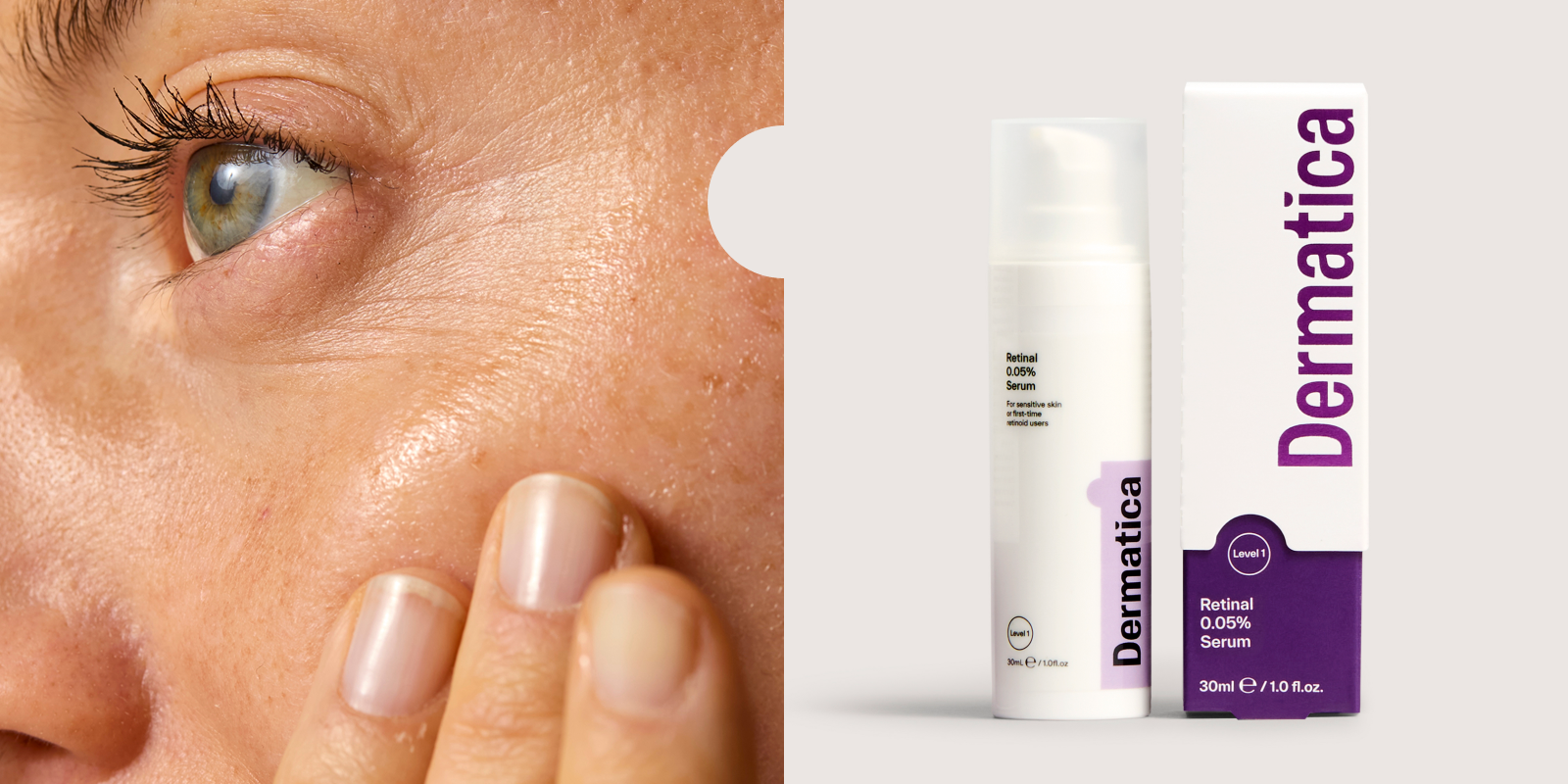
A recent social media phenomenon is “Ozempic face”. This phrase refers to changes in appearance after rapid weight loss, when people’s faces suddenly appear much slimmer, making effects like fine lines and sagging much more prominent. [1]
In this blog, we’ll explain why this happens and ways to address this with prescribed skincare treatments.
Article Summary:
– “Ozempic face” is a non-medical term used to describe the loss of volume in the face that can sometimes happen after significant or rapid weight loss.
– The appearance of Ozempic face isn’t caused by the medication itself, but by the loss of fat stores under the skin.
– Keeping to a consistent skincare routine that optimises skin quality and a balanced diet during weight loss may help minimise the appearance of facial fat loss.
What is Ozempic?
There’s a good chance you’ve heard of Ozempic, even though it’s not approved in the UK for obesity. It’s a weekly injection that was originally developed as a diabetes drug to improve insulin sensitivity in people with type 2 diabetes. Another effect is that it suppresses appetite, and this can result in weight loss.
Ozempic is a brand name for a medication named semaglutide. Semaglutide acts like a type of hormone that is naturally present in everyone’s body called GLP-1. This hormone sends signals to your brain and helps to regulate appetite.
Ozempic isn’t the only medication in this class. Four years later, the MHRA approved a higher dose version meant specifically for people with obesity. Medications like Wegovy have been approved for people with a BMI of 27 or above who have one or more weight-related ailments, or for people with a BMI of 30 or above. [2]
Ozempic for obesity and weight loss
Obesity is a long-term disease. Your genes, environment and behaviour can all play a part in developing it and making it more challenging to lose weight. Unfortunately, society often views obesity as a problem with willpower or a moral failing, but there are so many more factors at play than meets the eye. Many people face challenges with losing weight despite making changes to their lifestyle and diet. Genetic factors also play a role, and there are often physiological differences that make it much harder for some people to lose weight than others. [3]
It’s important to remember that weight loss injections aren’t an all-inclusive quick fix. Patients still need to eat well and exercise regularly. They can help some people lose an average of 20.7% of their body weight. [4]
However, because obesity is a chronic condition, it can require serious long-term commitment. Once you stop the medication, and the medication leaves your system, your appetite may return. Studies suggest that people often regain two-thirds of the weight they lost after one year of stopping the medication. [5]
Does Ozempic change your face?
Fat loss in your face will naturally change your appearance, however there’s nothing in Ozempic that’s designed to make skin look different or older. Ozempic can cause rapid weight loss, but any change in facial appearance varies from person to person. It usually happens because fat is lost from the face, which can make the cheeks, temples and under-eye area look less full.
It’s important to know that this is not unique to Ozempic or other GLP-1 medications. It can happen with weight loss from any cause, especially if the weight comes off quickly.
This ageing effect on the skin can happen when anyone loses a significant amount of weight, especially if it’s done in a short space of time. It has nothing to do with the drug itself and is not specific to weight loss injections.
Any method of losing weight could cause changes to your facial appearance. [6]
How to reduce the ageing effects of weight loss on your face
As you can’t choose which areas of your body you lose fat from during weight loss, you may lose it in areas that you might not necessarily want to, including your face. The facial effects of rapid weight loss can cause loose skin, more prominent fine lines and an overall more aged appearance with facial hollowing. This uncontrollable result is what the internet is calling Ozempic face.
A major, natural shift that also happens as we get older is the shrinkage and redistribution of the fat pads in our face. When someone experiences rapid fat loss, the fat pads are likely to decrease in volume as well. You’ll often notice loss of fat in the middle area of the face, where cheeks may develop a thinner or more hollow appearance. [7]
No matter what method you choose to lose significant amounts of weight, the effects can show up as sagging, loose skin or excess skin, more prominent jowls, deeper wrinkles, and an overall more sunken appearance. These effects are not specific to semaglutide weight loss injections.
Facial volume and skin ageing
Ageing is a natural and inevitable process, and visible signs of ageing you might recognise are wrinkles, sagging, and hollowed features.
Our faces change shape as we age. When we’re young, fat in our faces is evenly distributed, with some pockets that plump up the forehead, temples, cheeks, and areas around the eyes and mouth.
With age, facial fat can shrink, shift within its compartments, and descend, so areas that were once fuller may look hollow and create a sagging effect. Features that used to be round may sink, and skin that was smooth and tight can become looser. Meanwhile, other parts of the face gain fat, particularly the lower half. [8]
How collagen and elastin support skin health
Collagen and elastin are important proteins that help skin stay firm, smooth and elastic. As we get older, the body makes less of these proteins and the skin gradually loses some of its strength and bounce.
This degradation is due to a combination of intrinsic (genetic) and extrinsic (environmental) factors, such as sun exposure, pollution, and lifestyle choices.
As collagen and elastin break down, the skin loses elasticity and firmness. Your skin becomes more prone to creases and folds, which ultimately results in wrinkles forming. [9]
Preventative measures and treatments
Gradual weight loss
One of the best ways to combat the rapid loss of facial volume is to lose weight slowly (1 to 2lbs or 0.5 to 1kg per week). This allows the skin more time to adjust to the changes in body composition.
Retinoids
Long-term use of topical retinoids such as tretinoin can help improve the appearance of photoaged skin, by supporting collagen remodelling and increasing dermal thickness over time. While they cannot restore facial volume lost through fat loss, they can help improve skin texture, support elasticity, and reduce the appearance of fine lines.
Daily sunscreen
UV exposure is the leading cause of loss of skin elasticity, sun damage, wrinkles and skin thinning. To help prevent this, wear a broad-spectrum sunscreen with at least SPF30+ every day. [10]
Collagen supplements
Taking collagen supplements, such as marine collagen, may help combat collagen breakdown. Some people find it helps improve skin elasticity, hydration, and overall appearance by providing the body with the necessary building blocks to produce collagen. [11]
Dermal fillers
For those who have already experienced significant facial volume loss, dermal fillers can help restore fullness to the face.
The role of skincare
Ageing is a natural, inevitable process, but we always recommend using effective skincare to keep your skin healthy. If your goal is also to slow down skin changes associated with significant weight loss, keeping your skin’s health at optimal levels can also help you maintain younger-looking skin for longer.
Maintaining a consistent skincare routine is also key to:
– Protect against dehydration and oxidative stress
– Support a healthy skin barrier
– Lock in hydration
To find out what formula might be right for your skin to achieve your goals, visit our website.
Last updated: 21.07.2026
References
1. Humphrey CD, Lawrence AC. Implications of Ozempic and Other Semaglutide Medications for Facial Plastic Surgeons. Facial plastic surgery: FPS [Internet]. 2023 Aug 29; Available from: https://pubmed.ncbi.nlm.nih.gov/37541662/
2. Kommu S, Whitfield P. Semaglutide [Internet]. PubMed. Treasure Island (FL): StatPearls Publishing; 2024. Available from: https://www.ncbi.nlm.nih.gov/books/NBK603723/
3. Chiappini S, Vickers-Smith R, Harris DR, Pelletier G, Corkery J, Guirguis A, et al. Is There a Risk for Semaglutide Misuse? Focus on the Food and Drug Administration’s FDA Adverse Events Reporting System (FAERS) Pharmacovigilance Dataset. Pharmaceuticals [Internet]. 2023 Jul 11;16(7):994 Available from: https://www.ncbi.nlm.nih.gov/pmc/articles/PMC10384093/
4. Wharton S, Freitas P, Jøran Hjelmesæth, Kabisch M, Kandler K, Ildiko Lingvay, et al. Once-weekly semaglutide 7·2 mg in adults with obesity (STEP UP): a randomised, controlled, phase 3b trial. The Lancet Diabetes & Endocrinology [Internet]. 2025 Sep 1; Available from: https://www.thelancet.com/journals/landia/article/PIIS2213-8587(25)00226-8/abstract
5. Nast C. What You Need to Know About Ozempic: The Diabetes Drug Fuelling Hollywood’s Harmful Weight-Loss Obsession [Internet]. British Vogue. 2023. Available from: https://www.vogue.co.uk/beauty/article/what-is-ozempic
6. Panuganti KK, Nguyen M, Kshirsagar RK. Obesity [Internet]. Nih.gov. StatPearls Publishing; 2021. Available from: https://www.ncbi.nlm.nih.gov/books/NBK459357/
7. Wilding JPH, Batterham RL, Davies M, Van Gaal LF, Kandler K, Konakli K, et al. Weight regain and cardiometabolic effects after withdrawal of semaglutide: The STEP 1 trial extension. Diabetes, Obesity and Metabolism [Internet]. 2022 May 19;24(8):1553–64. Available from: https://pubmed.ncbi.nlm.nih.gov/35441470/
8. Wan D, Amirlak B, Rohrich R, Davis K. The Clinical Importance of the Fat Compartments in Midfacial Aging. Plastic and Reconstructive Surgery Global Open [Internet]. 2014 Jan 6;1(9). Available from: https://www.ncbi.nlm.nih.gov/pmc/articles/PMC4174112/
9. Krutmann J, Schalka S, Watson REB, Wei L, Morita A. Daily photoprotection to prevent photoaging. Photodermatol Photoimmunol Photomed. 2021 Nov;37(6):482-489. doi: 10.1111/phpp.12688. Epub 2021 May 6. PMID: 33896049.
10. Pu SY, Huang YL, Pu CM, Kang YN, Hoang KD, Chen KH, et al. Effects of Oral Collagen for Skin Anti-Aging: A Systematic Review and Meta-Analysis. Nutrients [Internet]. 2023 Jan 1;15(9):2080. Available from: https://www.mdpi.com/2072-6643/15/9/2080
11. Pu SY, Huang YL, Pu CM, Kang YN, Hoang KD, Chen KH, et al. Effects of Oral Collagen for Skin Anti-Aging: A Systematic Review and Meta-Analysis. Nutrients [Internet]. 2023 Jan 1;15(9):2080. Available from: https://www.mdpi.com/2072-6643/15/9/2080

Related Posts
October 30, 2025
0 Comments11 Minutes